
What the wind chill number means on a deer stand
The Weather Service figures it for bare skin, out of the sun, on a face five feet off the ground.
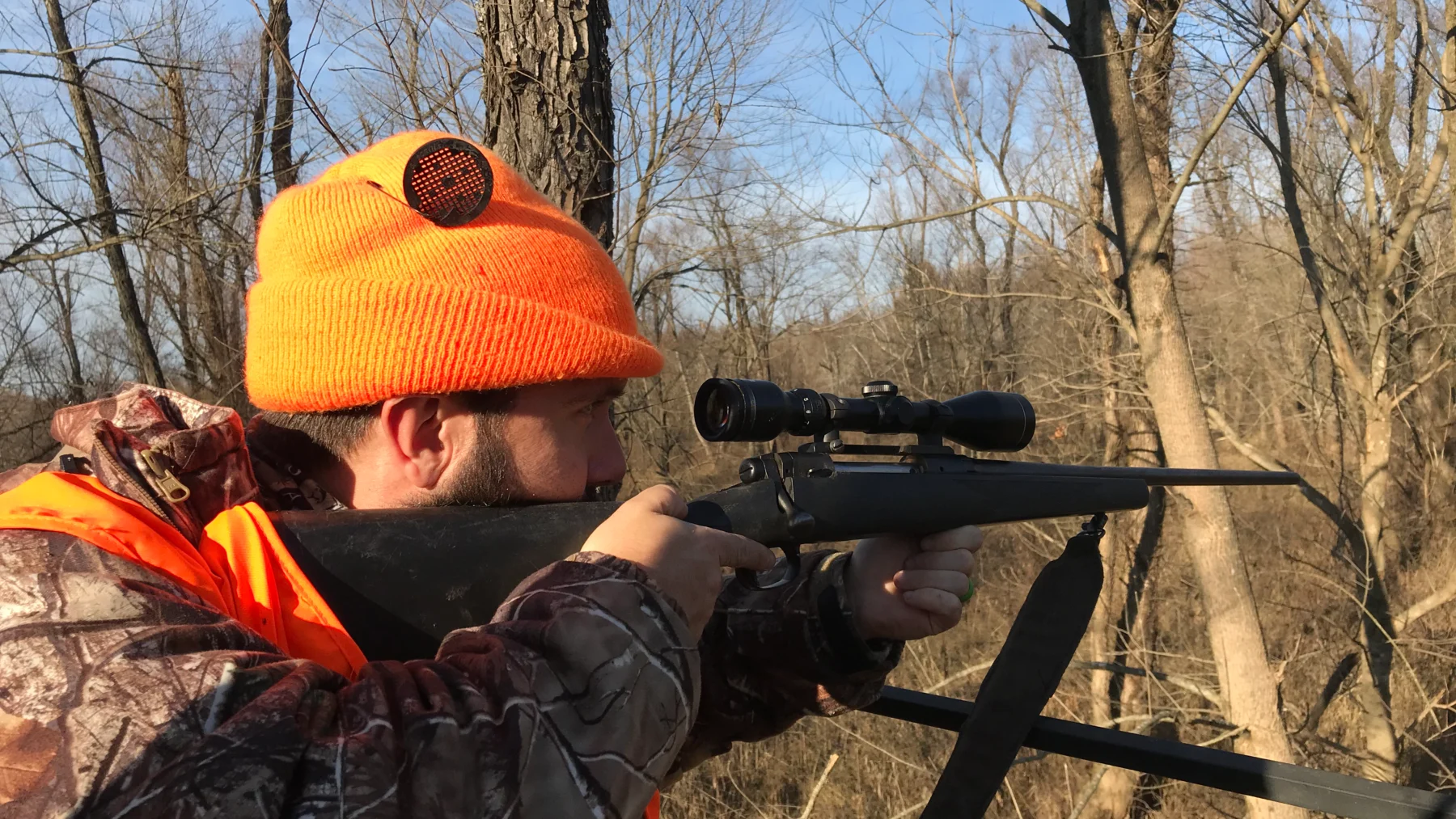
You mean to sit still, the thermometer reads 0°F and the wind is blowing 15 mph. The wind chill is -19°F, and at that number exposed skin can freeze in 30 minutes, the National Weather Service says. The example holds for bare skin with no help from the sun.
What the number assumes
Wind chill is figured from how fast wind and cold take heat from exposed skin. The index starts with wind measured at the standard height of 33 feet and calculates it down to 5 feet, about the height of an adult’s face. It is built on a model of that face. The Weather Service’s wind chill page says nothing about a person sitting higher, or about a hand inside a glove.
It also assumes a clear night sky. Bright sunshine may raise the wind chill temperature by 10 to 18 degrees. The tests were done on adults, and the Weather Service says to be more cautious with children, the elderly and people in poor health.
Reading the chart
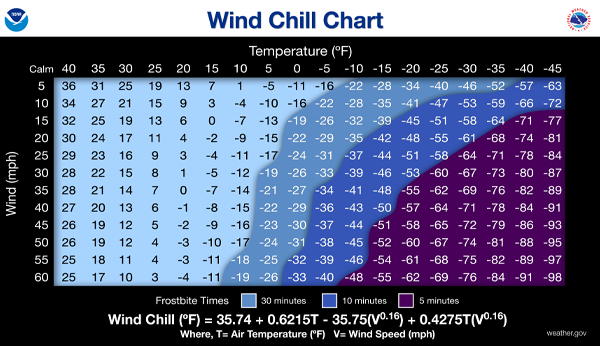
The Weather Service’s chart runs air temperature across the top and wind down the side, with shaded bands for frostbite in 30, 10 and 5 minutes. At 10°F a 20 mph wind reads -9, and the cell is outside all three bands. At 0°F the 30-minute shading begins at 15 mph. At -10°F the chart shades even a 5 mph wind.
A cell outside the bands carries no frostbite time, which is not a promise that skin is safe there. One line is firm: the air itself has to be below freezing for frostbite to develop on exposed skin. When the thermometer is above freezing, a wind chill below freezing will not give you frostbite.
You can still get into trouble on such a day. The Centers for Disease Control and Prevention says hypothermia can occur above 40°F in a person chilled by rain or sweat.
When a fingertip goes white
Both agencies name fingers, toes, ears and the nose, and the CDC adds cheeks and chin. Redness or pain may be frostbite beginning, the CDC says, and is the time to get out of the cold or cover the skin. Its signs of frostbite are a white or grayish-yellow patch, skin that feels unusually firm or waxy, and numbness. Because the frozen part is numb, a person may not know until somebody else points it out.
Both agencies say to get medical care for frostbite. If care is not at hand and there is no sign of hypothermia, the CDC says to get to a warm room and put the frozen part in warm water, not hot. With no warm water, use body heat, such as an armpit for frozen fingers.
Do not massage the skin or rub it with snow, the CDC says. Keep it away from a stove, a heat lamp or a heating pad, because numb skin burns easily. Stay off frostbitten feet unless you have no choice.
When the shivering will not stop
Hypothermia is a body temperature below 95°F, and the CDC names hunters among the people at risk because they stay outdoors for long periods. The Weather Service’s signs are uncontrollable shivering, memory loss, disorientation, incoherence, slurred speech, drowsiness and exhaustion. The CDC adds fumbling hands. Low body temperature affects the brain, the CDC says, so the person it is happening to may not know.
Get medical help at once. If it cannot come quickly, both agencies say to warm the center of the body, and the Weather Service says to do that before the extremities. Take off wet clothing. Wrap the person in dry layers, head and neck covered. Drinks should be warm, not hot, with no alcohol, and nothing at all for someone who is unconscious.
A person with severe hypothermia may not seem to have a pulse or to be breathing. The CDC says to get emergency help, handle the person gently and give CPR, even if the person appears dead.
Dressing to sit
Look up your own number before you leave. Weather.gov takes a city and state or a ZIP code for the local forecast, and its Understanding Wind Chill page has a calculator. The alerts to watch for are the Cold Weather Advisory and the Extreme Cold Warning, issued on criteria set locally.
The Weather Service’s clothing list begins with several loose, light, warm layers, because the air trapped between them insulates. Over those goes something tightly woven, water repellent and hooded. Mittens snug at the wrist are better than gloves, it says. Both agencies say to wear a hat. The CDC adds a scarf or knit mask for the face and water-resistant boots.
Then there is the walk in. The Weather Service says to remove layers to avoid sweating and chill, so take one off before you start to sweat.
Sources
All pages were read Nov. 25, 2026. They are works of the United States government, and their advice is general rather than written about deer stands. Chart values were read by eye from the chart image.
- National Weather Service: Understanding Wind Chill: what the number is, what it assumes, the freezing-time example, frostbite and the thermometer, and the current alert names.
- National Weather Service: Wind Chill Questions: signs, first aid and clothing. This page uses older alert names.
- National Weather Service: Wind Chill Chart: the values and the frostbite shading.
- Centers for Disease Control and Prevention: Preventing Hypothermia (page dated Aug. 25, 2026): signs, first aid, who is at risk, and clothing.
- Centers for Disease Control and Prevention: Preventing Frostbite (page dated Aug. 25, 2026): signs and first aid.
- National Weather Service, Grand Rapids: home page: the local forecast search.
Where the agencies differ. For a person with hypothermia the Weather Service bars coffee and any hot drink or food and says warm broth is better. The CDC says warm drinks can help, and says not to give a drink to an unconscious person. The story prints warm, not hot. The CDC page recommends an electric blanket and, in a caution on frostbite, warns against one, so the story leaves it out.