Where Michigan’s wolves are, and what the law says
A minimum of 792 wolves, all of them in the Upper Peninsula, and one question on which a state act and the DNR’s own summary read differently.
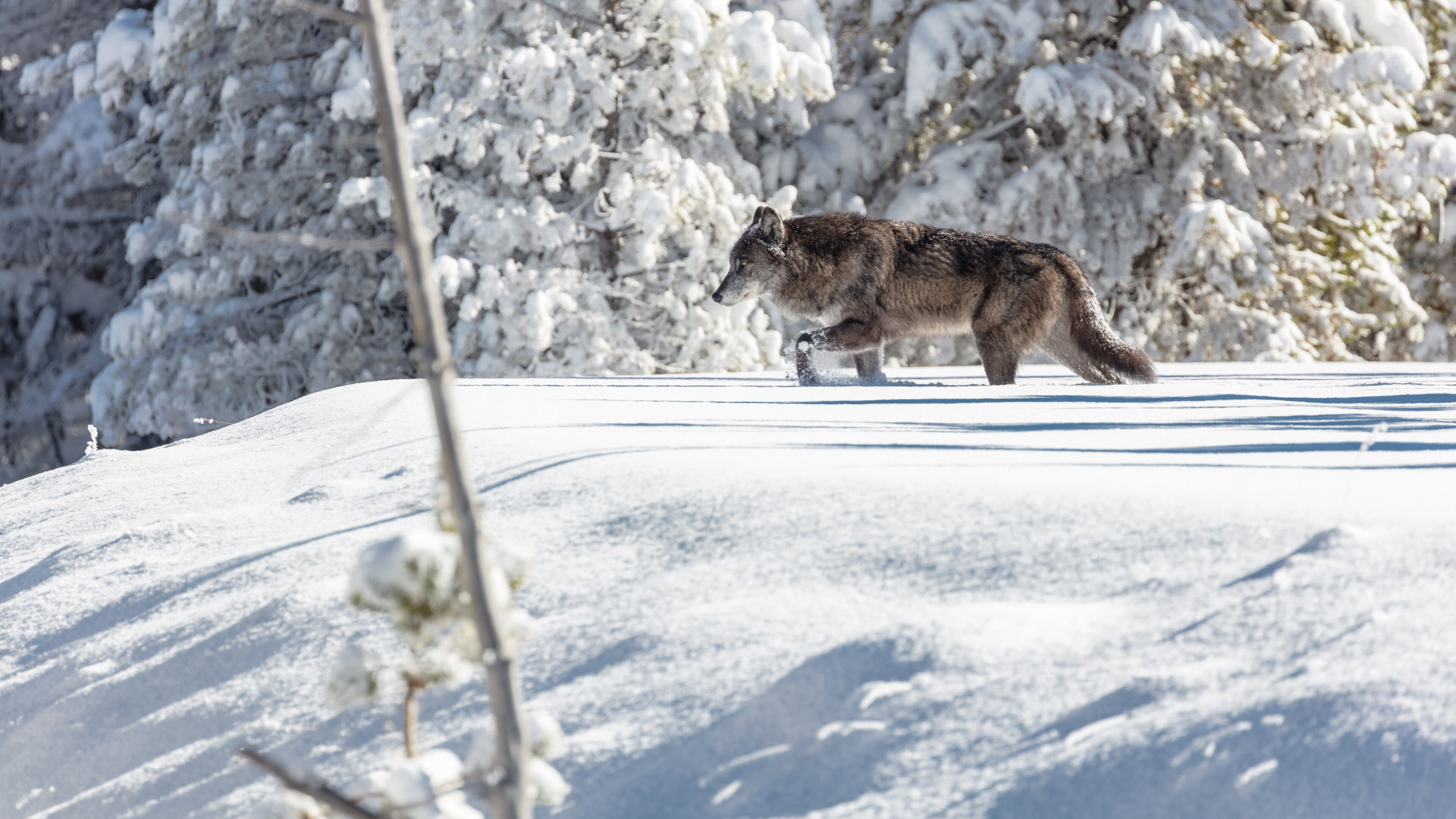
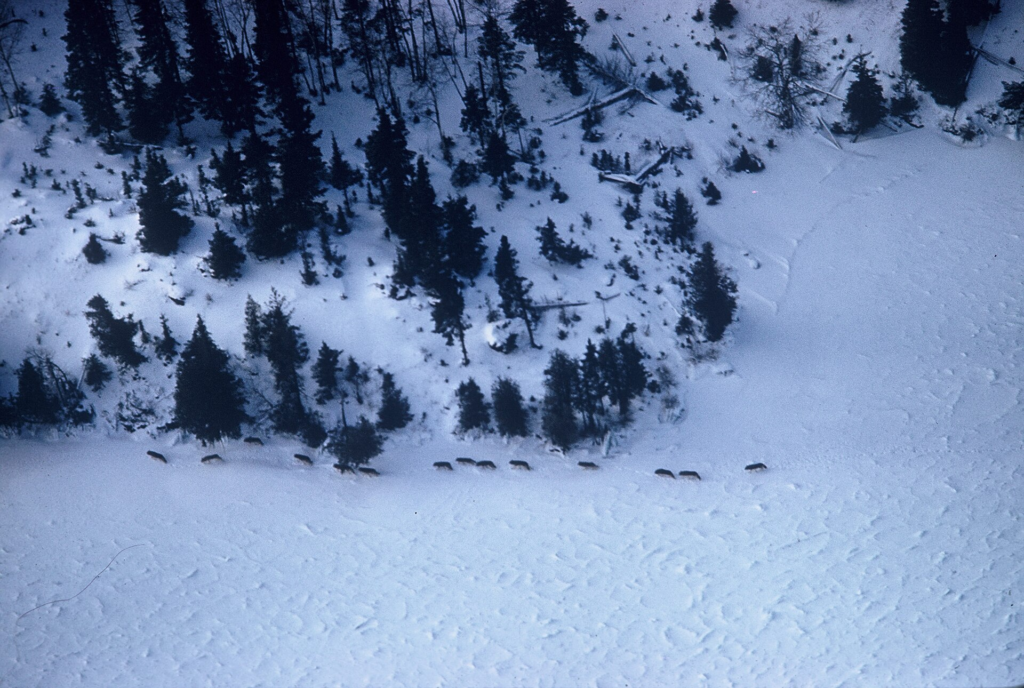
Michigan counts its wolves on foot, in the snow. Observers work the secondary roads and trails of the Upper Peninsula for tracks, and when they cut a pack’s trail they follow it, sometimes for miles, to count the animals in it. The DNR has run that survey every other winter since 2014, over about 60 percent of the peninsula. The 2026 survey produced 792 wolves, and the DNR calls that a minimum.
Endangered, as of Nov. 14, 2026
On Nov. 14, 2026 the gray wolf in Michigan was listed as endangered under the federal Endangered Species Act. That is the reading off the U.S. Fish and Wildlife Service’s own listing database, which puts Michigan inside an endangered entity covering all or part of 44 states and Mexico, listed March 9, 1978. A search of the Federal Register the same day turned up no later rule whose title names a change in that listing. The DNR says the same on its wolf pages and in its August bulletin.
What that means for a person is on three DNR pages, in the same words. “Wolves are currently protected under the federal Endangered Species Act.” “Wolves can only be killed if they are a direct and immediate threat to human life.” “If an animal is killed, the incident must be reported to the DNR.”
Those pages stop there. They do not say how the report is made, to whom at the DNR or how soon, and print no telephone number. The one reporting number on any of the DNR’s wolf pages is on the wolf-dog page, for a conflict with a dog.
The count, and what kind of number it is
Minimum is the DNR’s own word, and its research page says why. The survey runs in winter, when snow makes a track visible and the population is at its lowest point of the year, so the figure is a minimum estimate and not a count of the animals alive. The 792 is from a DNR bulletin dated Aug. 6, 2026. The DNR’s wolf landing page, read Nov. 14, 2026, still carried only the earlier figure of 768 animals, from the 2024 track survey.
That bulletin also carried the first results of a second method. The DNR and Michigan State University hung 1,311 cameras on tree trunks four to five feet up along low-use roads and trails, sorted the images by machine learning and checked them by hand. For February and March of 2024, the weeks of the track survey that gave 768, the cameras gave 773 wolves and 794. Across the project’s first 21 months, October 2023 to June 2025, the monthly estimates ran from 525 wolves in March 2025 to 1,198 in October 2024, single-month figures from different seasons.
No DNR document read here gives a margin of error, a range or a confidence interval for any of those figures, and none gives a number of packs. The word minimum is all the publisher says about its own confidence.
Where they are
The DNR puts all of Michigan’s wolves in the Upper Peninsula and goes no finer than that. Its landing page says they are native to Michigan and currently found there, and its bulletin says they are now known to inhabit only the U.P. No page read here names a county, a forest or a part of the peninsula where wolves are more or fewer, and none prints a map of range.
What the pages do give is the scale of the country. A pack’s territory in the Upper Peninsula averages 98 square miles, white-tailed deer are the primary prey, and beaver become an important food in spring and early summer.
How the listing moved
The listing stands on a court order. A federal district court for the Northern District of California vacated the Service’s November 2020 delisting rule, and that order took effect Feb. 10, 2022. The Service brought the Code of Federal Regulations back in line by a final rule published and effective Nov. 3, 2023, at 88 FR 75506, reinstating endangered status in Michigan and threatened status in Minnesota.
It has moved before. The Service delisted the western Great Lakes wolves by rules of Feb. 8, 2007, April 2, 2009 and Dec. 28, 2011, and the listing came back each time: on Dec. 11, 2008, on Sept. 16, 2009, and, after a federal court vacated the 2011 rule on Dec. 19, 2014, by a rule of Feb. 20, 2015. The fourth delisting, of Nov. 3, 2020, is the one the 2022 order undid.
Michigan’s own law says two things at once
In the Michigan wildlife code the wolf is game, at subsection (kk) of section 324.40103, and section 324.40110b, added by 2012 PA 520, says the Legislature authorizes the establishment of the first open season for wolf and lets the commission order annual seasons. Neither section says that a season is open, and no page read for this story says one is. What the DNR points to in saying what may be done with a wolf is the federal listing.
The state penalty is in section 324.40118: a violation of that part regarding the possession or taking of a wolf is a misdemeanor punishable by not more than 90 days, a fine of $200 to $1,000 and the costs of prosecution, with no hunting license of any kind for the rest of that year and the next three. No document read here gives a federal penalty, so none is stated.
A wolf and a dog
The DNR calls wolf attacks on domestic dogs relatively rare, and says most happen where dogs are trained or used for bear hunting, in seasons that overlap the weeks when wolf pups are at homesites.
Its instruction to an owner is the same on the wolf-dog page and in the 2026 Furbearer Harvest Regulations Summary: “Report all suspected wolf-dog conflicts to the DNR immediately to allow a timely investigation.” The number is the Report All Poaching line, 800-292-7800, which the wolf-dog page says takes a call or a text any hour of any day.
On the question a houndsman actually asks, the documents do not read alike. The 2026 furbearer summary says that “at this time, the use of lethal control of wolves in the act of depredation is not authorized.” A 2008 state act, 2008 PA 318, is still printed on the Legislature’s website: its section 324.95163 says the owner of a dog may use lethal means to destroy a gray wolf in the act of preying on the dog. Section 324.95167 of that same act says its sections 1 to 5 are not operational and enforceable until a federal rule removing Michigan’s wolves from the list takes effect, and the compiler’s note under it stops at a rule of April 2, 2009. This story does not tell you what that adds up to. The DNR’s summary says not authorized and, because the federal status has changed and may change again, tells a dog owner to ask a DNR office about current rules.
The DNR keeps a running report of confirmed wolf and dog conflicts, linked from its wolf-dog page and, it says, updated daily. As that report stood on Nov. 14, 2026 it showed 90 dogs killed and 42 injured, 73 of the killed and 31 of the injured being hunting dogs, meaning hounds. Its text does not give the span of years those totals cover, so they are not any year’s figure. The DNR says it has no record of an upland bird or waterfowl dog killed or injured by wolves.
A wolf in a trap
The 2026 furbearer summary gives a fur harvester a procedure for a non-target animal. Release live protected animals from the trap immediately. If the animal is dead, or dies in the attempt to release it, attach a Michigan incidental tag before taking it out of the trap, then transport the carcass in an open manner to the nearest DNR office and surrender it. The tags are free, print with a fur harvester license, and the DNR says to have them before you trap.
The summary’s procedure never names the wolf. It speaks of nongame protected species and of live protected animals, and nothing read here says which of those terms, if either, covers a wolf, while the wildlife code lists the wolf as game. The summary does not say what a trapper is to do with a live wolf he cannot release, and prints no number there.
Livestock
Livestock has an act of its own. Under 2012 PA 487 the Michigan Department of Agriculture and Rural Development provides indemnification for livestock killed, injured or lost to wolves, coyotes and cougars, and an owner must report the incident to that department within 24 hours after the animal is found dead, injured or missing. What is paid is in a section this desk did not read, and the act does not mention dogs.
The plan, and what no page answers
The DNR’s wolf management plan, last updated in 2022, is by the DNR’s own description strategic guidance that does not outline operational details. The plan itself is a PDF that returned no readable text when it was opened, so nothing here comes from it.
No DNR page read for this story tells a person what to do on seeing a wolf on a two-track, or asks for a sighting to be reported.
Before you go out
Michigan.gov/Wolves is the DNR’s wolf page, where its furbearer summary sends a reader. That summary carries both the wolf-dog passage and the incidental-catch procedure, and sends a trapper wanting release instructions to Michigan.gov/Trapping. A conflict with a dog goes to 800-292-7800, by call or text, any hour. A question goes to the DNR’s Marquette Customer Service Center, 906-228-6561. The DNR’s wolf pages print no date of their own, which is reason enough to read them again before you go.
Sources
Every number in this story carries the survey year, the method and the publisher, and every statement of law or of a requirement names the document it comes from. All fourteen sources were read on Nov. 14, 2026. No interview was conducted, and nothing here is legal advice: where a statute and an agency page read differently, both are reported and neither is resolved. The story takes no position on listing or on a wolf season.
The federal status. U.S. Fish and Wildlife Service, ECOS species profile for the gray wolf (Canis lupus), the Service’s own listing database, read through the first ten Federal Register rows; the endangered entity that contains Michigan is dated March 9, 1978 and its range entry reads “Last Updated: 12-16-2024”. The rules: 88 FR 75506, Nov. 3, 2023, the reinstatement in compliance with a court order; 85 FR 69778, Nov. 3, 2020, the delisting; and 80 FR 9218, Feb. 20, 2015. The earlier dates in the story come from the listing citations in the 2023 rule’s amended table at 50 CFR 17.11(h), the background of the 2015 rule, the dated timeline on the Service’s species page linked below, and the two Michigan acts’ own references to the rules of Feb. 8, 2007 and April 2, 2009. The search behind the sentence about later rules was of Fish and Wildlife Service documents containing the phrase gray wolf, newest first, and reached the first page of titles only.
The DNR. Michigan Department of Natural Resources: Wolves in Michigan (the page Michigan.gov/Wolves redirects to), Wolf population research, Wolf history and legal status, Wolf biology and habitat, Wolf-dog conflicts and Wolf management plan, all read whole; the 2026 Furbearer Harvest Regulations Summary, read in the passages found by searching it for wolf, nontarget, incidental, protected and release; the confirmed wolf and dog conflict report, a Power BI report linked from the wolf-dog page and read as its text stood on Nov. 14, 2026; and the bulletin Showcasing the DNR: Michigan estimates UP wolf population from remote camera images, dated Aug. 6, 2026, which carries the 792 and the camera figures. Not one of those six wolf pages prints a date of its own. The wolf management plan is a PDF the DNR links from its plan page; it returned no readable text when it was opened, so nothing in this story comes from the plan itself, only from the DNR’s page about it.
The statutes, as published on legislature.mi.gov on Nov. 14, 2026. Natural Resources and Environmental Protection Act, 1994 PA 451: section 324.40103 (the wolf as game), section 324.40110b (the first open season), section 324.40113a, section 324.40118 (penalties) and section 324.43528b (the license fee). 2008 PA 318, on a wolf preying on a dog, sections 324.95161, 324.95163 and 324.95167, read whole; section 324.95165 was not opened. 2008 PA 290, on a wolf preying on livestock, whose sections 324.95151 and 324.95153 the Legislature’s site prints under a banner reading that they are not operational or enforceable until one of the conditions in MCL 324.95155(1) occurs. 2012 PA 487, the Wildlife Depredations Indemnification Act, sections 285.362, 285.363 and 285.365; section 285.364, which sets what is paid and the limit per incident, was not opened.
Where the record disagrees. The overview paragraph on the Service’s gray wolf species page says the remaining populations in the contiguous United States were delisted in 2021. The Service’s listing database, the timeline further down that same page and the 2023 rule all say otherwise, so this story takes the status from the database and the rule and does not use the overview. On the first federal listing the DNR’s page says 1974 while the Service’s timeline begins in 1967 and its database dates the present entity to 1978; no source read explains the difference, so the story gives no “first listed” year. The DNR says the Service downlisted the wolf to threatened in 2003; the Service’s timeline as read carries no 2003 item. On a dog’s owner using lethal means, 2008 PA 318 as published and the DNR’s 2026 summary read differently, which the story reports and does not resolve. On a wolf in a trap, the furbearer summary’s procedure covers nongame protected species and protected animals and never names the wolf, while the wildlife code lists the wolf as game.
What is not here. The November 2014 statewide vote on a wolf season: the Secretary of State’s results site refused twice on Nov. 14, 2026, and the Legislature’s compiler’s notes do not record the vote, so the story says nothing about it. What those notes do record, and this story leaves to a later piece with the canvass in hand, is that 2014 PA 281 came by initiative petition and was approved by the Senate on Aug. 13 and the House on Aug. 27, 2014; that in Keep Michigan Wolves Protected v State of Michigan, an unpublished opinion of Nov. 22, 2016, the Michigan Court of Appeals held that act unconstitutional under the title-object clause; and that the definitions section was amended again by 2016 PA 382, effective Dec. 22, 2016. Also not captured: whether Michigan has ever held a wolf season; whether the wolf is on Michigan’s own threatened and endangered list today; the federal penalty for killing a listed animal, and the federal regulation behind the DNR’s “direct and immediate threat to human life”; where the reinstated federal critical habitat in Michigan lies; what became of the appeals of the 2022 court order; the span of years covered by the dog-conflict totals; any DNR or Department of Agriculture and Rural Development page on livestock claims in practice; and Isle Royale, which was not researched for this story. No page read tells a person what to do on seeing a wolf.