Where Michigan releases pheasants in December
Thirteen southern Michigan game areas get birds through Jan. 1. They take a $25 license of their own, and the printed summary still names one area the program has left.
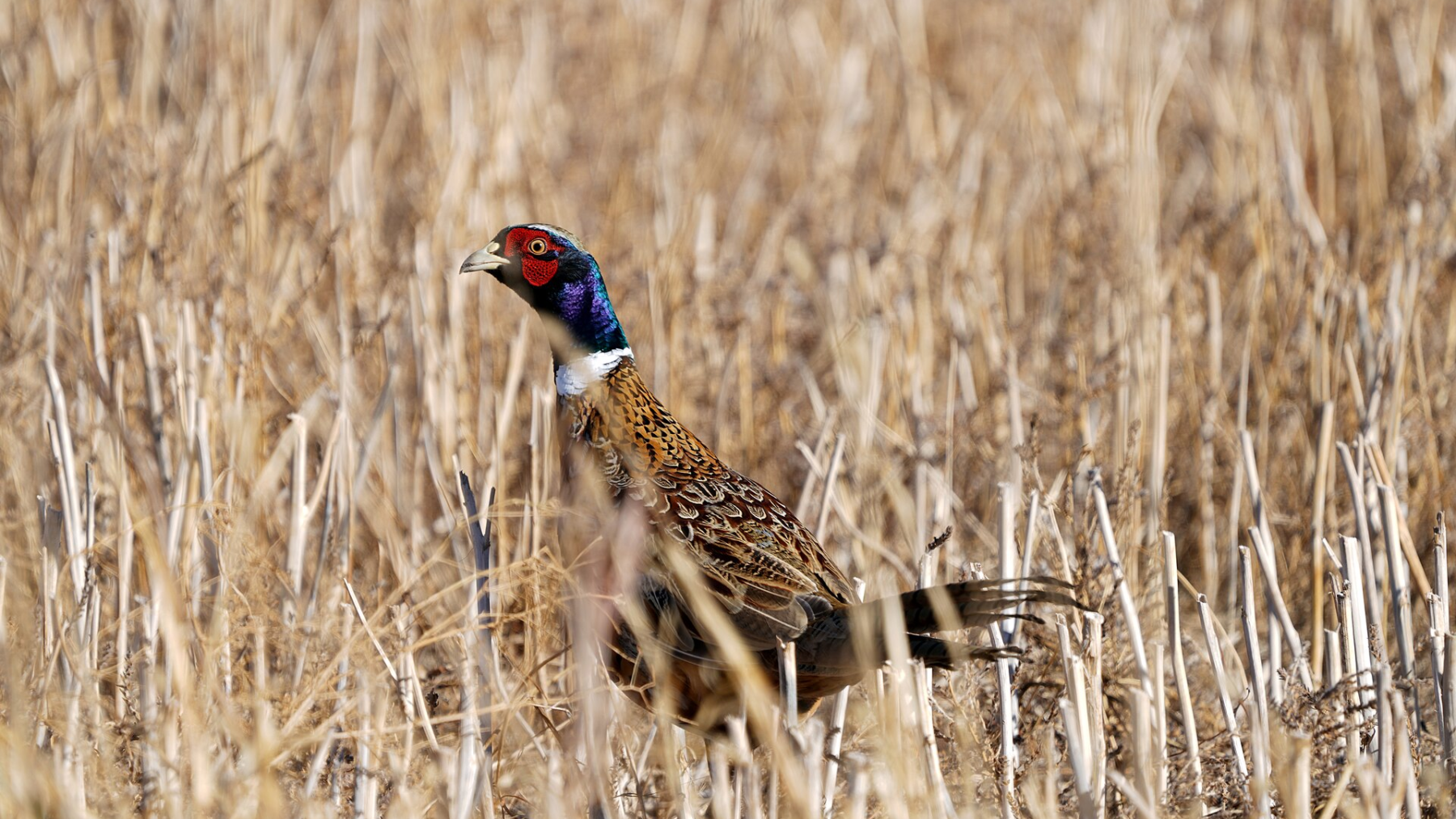
On Dec. 1 the DNR starts putting pheasants out again on thirteen state game and wildlife areas in southern Michigan, and keeps at it through Jan. 1. The season that goes with them, by the DNR’s 2026 small game summary, is open in the December pheasant management unit, which takes in all of Zone 3.
The birds are there for anyone who holds the right licenses and can find the right ground. The second part is harder than it should be: the department’s own printed summary names one area the program has left.
Where the birds go
The DNR’s Oct. 19 release names the thirteen areas with their counties, and the DNR’s pheasant release page names the same thirteen; both were read Nov. 22. The release describes them as stretching “from the southwest corner of the state through the Lansing area and into the Thumb and Metro Detroit.” In the release’s order:
– Cornish, Van Buren County – Crane Pond, Cass County – Crow Island, Bay and Saginaw counties – Dansville, Ingham County – Erie, Monroe County – Gagetown, Huron and Tuscola counties – Lapeer, Lapeer County – Leidy Lake, St. Joseph County – Pointe Mouillee, Monroe and Wayne counties – Rose Lake, Clinton and Shiawassee counties – St. Johns Marsh, St. Clair County – Stanton, Montcalm County – Townline 16, Bay County
Gagetown is the new name. The Oct. 19 release says that this year the birds go to the Gagetown State Game Area instead of the nearby Cass City State Game Area, and the release page lists Gagetown too. The DNR’s 2026 small game summary still lists Cass City, in Tuscola County, and no Gagetown. A hunter working from the summary would drive to ground the program has left.
What it takes to hunt it
An adult needs two licenses. A base license is required for everyone who hunts in Michigan, the summary says, and a hunter 18 or older on public land in the Lower Peninsula, or on land enrolled in the Hunting Access Program, also needs the pheasant license. That one costs $25 for a resident, a senior and a nonresident alike. The base license runs $11 for a resident 17 to 64, $5 for a resident 65 and older, $6 for a youth 10 to 16 and $151 for a nonresident 17 and older, by the summary’s fee table, and is good through March 31, 2027.
The DNR’s pheasant release page lists five kinds of hunter who need no pheasant license: hunters on private land, on public land in the Upper Peninsula, on a game bird hunting preserve, hunters 17 or younger, and lifetime license holders. The private-land exception stops at the Hunting Access Program, which state law names as still needing the license. A nonresident with a three-day or seven-day small game license cannot buy a pheasant license on it, the summary says, without also buying a base license.
The pheasant license is not a kill tag. Only cocks may be taken, two a day and four in possession, by the summary. Licenses are sold by license agents, online at Michigan.gov/DNRLicenses and in the Michigan DNR Hunt Fish app.
On the release ground, all regular hunting regulations apply, the department said in 2023. No page read for this story gives any one area’s own hours, parking rules or registration, and none is stated here.
When, and what is not said
Releases run Oct. 20 to Nov. 14 and again Dec. 1 to Jan. 1 at all thirteen areas, by both the summary and the release. The fall half is over. The release puts the total at nearly 7,300 pheasants for fall and winter together and gives no split, so how many are left for December is not in the record.
Neither is where on an area the birds go, or on which day. Release sites were chosen for suitable pheasant habitat and for the conditions a release area needs, and “DNR staffers do not provide specific release locations or release times,” the department said in 2023.
Who pays, and what it is for
The birds come from the Michigan Association of Gamebird Breeders and Hunting Preserves, the DNR’s partner in the program, according to the Oct. 19 release. The money comes from hunters. State law, MCL 324.43525c, added by Act 262 of 2020 and in effect since March 24, 2021, sends the pheasant license fee to a pheasant subaccount, and the department may spend it only on buying and releasing live pheasants on state-owned land suited to them. “The $25 pheasant license funds the program,” the release says.
The department is plain about the purpose. A 2023 DNR article by its upland gamebird specialist says of the 2019 pilot, “The focus was on providing excellent hunting opportunities rather than increasing populations.” Only males are released, the article says, which maximizes the number of birds available for hunting.
“This decision has been controversial, as some support releasing hens to attempt to increase wild bird populations,” the same article says of the cocks-only rule. “However, pheasant releases seldom result in pheasant numbers increased.” The department’s work on the wild bird lies elsewhere: “Habitat work has remained the central focus of wild pheasant population enhancement efforts.”
Michigan hunters took more than 1.4 million pheasants in 1944, by the 2023 article. In 2017 the DNR estimated 12,855 birds taken by 16,443 hunters. The Oct. 19 release lays the wild bird’s decline “largely to loss of grassland habitat fueled by large-scale agriculture practices and suburban development.”
Adam Bump, the DNR’s upland birds specialist, made the program’s case in that release. “For many hunters, the program gives them a chance to relive the good old days of pheasant hunting, which at one point was more popular than deer hunting,” he said. “It also gives younger people the chance to go hunting on public lands and exposes the next generation to pheasant hunting.”
The DNR’s pheasant release page gives directions to parking lots for every area: one at Townline 16, four at Gagetown, seven at Rose Lake. Lots near the release ground typically carry a sign saying a release site is nearby, the department said in 2023, with contact information for the breeder who supplied the birds for that site.
Sources
Every fact in this story comes from a State of Michigan document read on Nov. 22, 2026. No outside source was used, and no one was interviewed.
- Michigan DNR: Pheasant release info: the thirteen areas by short name, the parking lot directions, who needs a pheasant license.
- Michigan DNR: 2026 Small Game Hunting Regulations Summary, the department’s web copy: the season windows, the December pheasant management unit, the release windows, the license fees, the exceptions, the nonresident rule, the bag and possession limits, where licenses are sold.
- Michigan DNR news release, Oct. 19, 2026, “Nearly 7,300 pheasants to be released in southern Michigan this year”: the list with counties, the Gagetown change, the partner, the total of birds, the cause of the decline, Adam Bump’s statement.
- Michigan DNR, Sept. 14, 2023, “Showcasing the DNR: DNR’s pheasant release program expands hunting opportunities”, by Adam Bump: the program’s history and purpose, the cocks-only decision, the withheld release times and locations, the parking lot signs, the harvest figures for 1937 to 1959, 1944 and 2017. Nothing from it is used as a 2026 rule.
- Michigan Compiled Laws, section 324.43525c: the pheasant license, its fee, its exceptions and the pheasant subaccount.
Where the record disagrees. The 2026 summary lists Cass City (Tuscola County) and not Gagetown; the release page and the Oct. 19 release list Gagetown, and the release says it replaced Cass City this year. This story follows the release. The 2023 article puts Cornish in Cass County; both 2026 documents put it in Van Buren County, which this story uses. The Oct. 19 release calls 2026 the program’s seventh year; the 2023 article counts a 2019 pilot, a pause in 2020 and the new program’s first year in 2021, so this story prints no count. The release page spells some names short (“St Johns”, “Pt Mouillee”, “Leidy Lakes”); this story uses the release’s names.
What the pages do not settle. No area’s own rules, hours or registration were read. The department does not say how many of its nearly 7,300 birds go out in December, or where and when on an area. The Zone 3 line is not described here. No page read gives this year’s license sales or program cost, or what the 2021 and 2025 amendments to the statute changed.